Essential cookies keep the site running. With your OK we also use optional ones to understand how the site is used and make it better. See our Cookie Policy.
Your choice is kept for 12 months.

Modern businesses depend a lot on their hardware. Keeping these assets safe is key to success. A small mistake can cause big problems.
Handling infrastructure risk means being ahead of the game. Companies must see that hardware is often the first target for threats. Keeping these areas safe helps businesses stay up and running.
Good data center security is more than just digital walls. It needs strong physical protection to block unauthorized access. As tech changes, so must our defenses.
Creating a strong system begins with protecting the server room. Focusing on these basics builds a better shield against problems. This way, important work keeps going, even when things get tough.
Data centers are key to our digital world but face many security threats. Keeping secure data storage safe is crucial. This means protecting against both outside and inside dangers. By spotting these risks early, companies can use strong threat mitigation plans to keep their data safe.
Physical security breaches often come from unauthorized access by bad actors. They might try to steal servers or tap into networks to get data. To stop this, data centers need strong security like biometric scanners, cameras, and limited entry points.
Internal mistakes can be a bigger risk than outside threats. Mistakes like wrong cooling settings or damaged cables can cause big problems. Human error is a top reason for security issues, showing the need for strict rules and training.
When staff don’t follow security rules, the whole place is at risk. To avoid this, companies should automate tasks to cut down on mistakes. Keeping a close eye on things helps catch small problems before they get big.
Environmental risks like fires, floods, and earthquakes are big challenges for secure data storage. These can damage hardware and cause data loss if not prepared for. Data centers need backup power and cooling to handle these risks.
To prevent data breach prevention, regular checks for environmental weaknesses are key. Strengthening buildings and using advanced fire systems helps protect against these dangers. Being ready for these risks is vital for keeping businesses running in a changing world.
Strong physical protection is key to keeping sensitive hardware safe. Digital firewalls are important, but they can’t stop someone who gets to the server racks directly. Keeping the facility’s perimeter secure means only those who should be there can touch the important stuff.
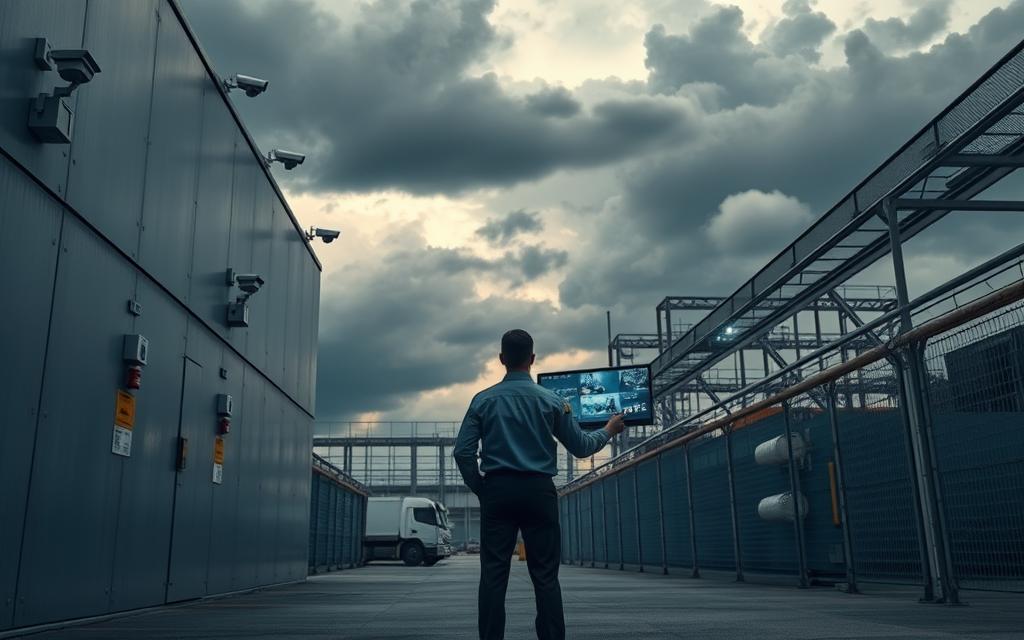
Today’s facility access control systems are more detailed than ever. They use things like fingerprint or iris scans to check who’s coming in. These are often combined with extra checks to make sure it’s really you.
By asking for more than one thing to prove who you are, managers can lower the chance of someone getting in who shouldn’t. These facility access control steps make it clear who’s been where. This is crucial for keeping things running right and following the rules.
Modern surveillance systems keep an eye on the data center all the time. High-def cameras with motion detection can tell security if something odd is happening right away. When linked with server room monitoring software, they let admins watch over things and keep an eye on the environment.
Good server room monitoring means any odd thing, like a door left open or someone they shouldn’t be there, gets fixed fast. Here’s a table showing the main differences between security tech used today.
| Technology Type | Primary Function | Security Level |
|---|---|---|
| Biometric Scanners | Identity Verification | Very High |
| Smart Card Readers | Access Authorization | Moderate |
| Motion Sensors | Intrusion Detection | High |
| Video Analytics | Real-time Surveillance | High |
Managing infrastructure risk means being proactive. Organizations need to do more than just basic security. They must build a strong environment that can handle surprises.
By making systematic improvements, companies protect their hardware and data. This keeps them safe from harm.
Good threat mitigation starts with avoiding single points of failure. Engineers put in redundant power and cooling systems. This keeps things running even when there are problems.
When the main systems fail, the backups kick in. This quick switch is key to keeping equipment safe. It lets tech teams fix issues without stopping the whole network.
Regular checks are key to finding security weaknesses early. Companies should do detailed audits to look at access logs and environmental controls. These checks show where the facility is most at risk.
By looking at these findings, management can focus on needed upgrades and policy changes. Regular reviews keep security up to date with new tech. This keeps the facility safe from threats.
People are a big part of any security plan. Training programs teach staff to spot and report odd behavior. When everyone knows their part in data breach prevention, the whole team is safer.
Workshops and drills keep everyone alert. Staff learn to report strange things fast. This cuts down the time hackers have to get in. People are as important as the tech.
| Strategy | Primary Benefit | Implementation Frequency |
|---|---|---|
| Redundant Power | Prevents Downtime | Continuous |
| Security Audits | Identifies Vulnerabilities | Quarterly |
| Staff Training | Reduces Human Error | Bi-annually |
Modern innovation brings powerful ways to protect critical assets from new threats. Organizations are turning to smart systems for strong data center security. This is in a world where digital threats are growing.
Companies like NVIDIA and Cisco use AI to check traffic patterns for oddities in real time. These systems help find threats early, letting security teams act fast. This keeps data safe and secure.
Old methods like keys and badges can’t always stop unauthorized access. Now, iris scanners and facial recognition from HID Global are used. These biometric tools make it hard for unauthorized access.
Cloud-based dashboards offer full view of distributed systems. Teams can watch over sensors and entry points from anywhere. It’s important to check current security plans and add these advanced tools to protect against future threats.
Following the industry, hunting a role or hiring for one: one account opens all of it.
Enter your email or username and we'll send you a secure link to set a new password.
Discussion