Essential cookies keep the site running. With your OK we also use optional ones to understand how the site is used and make it better. See our Cookie Policy.
Your choice is kept for 12 months.

Modern data centers and industrial sites need constant electricity to work. Keeping Power & UPS systems stable is crucial for facility managers. They aim to avoid expensive downtime. The right backup technology is a strategic decision that affects long-term success.
Facility leaders often compare mechanical flywheels to traditional chemical batteries. This comparison focuses on Energy Efficiency and daily Operations. Knowing these differences helps protect critical hardware.
Good Energy Efficiency means hardware that lasts for years. When Operations teams focus on reliability, they keep their Power & UPS setup strong during unexpected power issues. This guide looks at the main technical differences between these two backup methods.
Key Takeaways:
Every high-availability facility faces the threat of power outages. These can lead to data loss or damage to equipment. Facility managers must find ways to keep sensitive equipment running smoothly.
An Uninterruptible Power Supply (UPS) is key during power issues. It quickly spots when power drops or goes out. It gives clean energy right away, so equipment doesn’t shut down too soon.
The key role of this tech is to act as a buffer. It makes sure the switch from grid power to a backup generator is smooth. Without it, even a brief outage can cause big problems.
Keeping energy flowing is crucial for modern facilities. Backup Power Systems protect valuable assets and keep things running smoothly. When the grid fails, these systems give generators time to kick in and stabilize.
Energy continuity is more than just a technical need; it’s a business must. Places that focus on reliable power save a lot on downtime and recovery. Investing in good power management protects important digital and physical operations.
Flywheels are becoming key in high-performance places. They don’t use chemicals like traditional systems. Instead, they use physics to keep energy stable. This makes them great for managing Power & UPS needs in tough spots.
A flywheel has a heavy rotor spinning fast in a vacuum. This stores energy as kinetic energy. It’s ready to turn back into electricity when power drops.
The rotor spins with little loss thanks to magnetic bearings. When power issues arise, the stored energy quickly turns back into electricity. This keeps the Uninterruptible Power Supply running smoothly without pause. Unlike other methods, flywheels don’t use complex chemical reactions.
Flywheel tech is great for places needing top-notch energy management. They shine in situations where quick action is needed.
Using these systems helps keep Power & UPS stable. A mechanical Uninterruptible Power Supply protects important gear from power issues. This makes them a top pick for modern places focusing on efficiency and lasting stability.
Today, many places use battery-based tech to keep running when power goes out. These Backup Power Systems are key for places like data centers and hospitals. They use stored chemical energy to keep things going until other power sources kick in.
The main types of batteries used are VRLA and Li-ion. VRLA batteries are known for being cost-effective and reliable. They’ve been a go-to for a long time.
Lithium-ion (Li-ion) batteries are becoming more popular. They pack more energy in a smaller space. This makes them ideal for places where space is limited.
An Uninterruptible Power Supply with batteries can run for a long time. This is crucial for many industries that can’t afford to stop.
The table below shows how VRLA and Li-ion batteries differ:
| Feature | Lead-Acid (VRLA) | Lithium-ion (Li-ion) |
|---|---|---|
| Energy Density | Low | High |
| Lifespan | 3-5 Years | 8-12 Years |
| Footprint | Large | Compact |
| Initial Cost | Lower | Higher |
Choosing the right Uninterruptible Power Supply depends on the load and space. Lead-acid is cheaper but Li-ion lasts longer. Managers need to decide based on their needs for power.
Choosing between flywheel and battery-based UPS systems affects a facility’s energy use over time. Operators must balance immediate needs with long-term costs of power and cooling.
By focusing on Energy Efficiency, companies can keep their critical systems running well and affordably.
Flywheel systems are better in places where keeping cool is hard. They work well in many temperatures, unlike batteries that need strict control.
This means less need for cooling in the UPS room. This lowers the building’s cooling needs.
Battery systems need constant cooling to last long. This leads to more electricity use, as cooling systems run all the time.
Choosing efficient UPS systems cuts down on costs over time. Even though they might cost more upfront, they save money on power.
Places with smart Power Management Solutions see lower bills and longer equipment life. These savings help pay back the investment quickly, showing efficiency’s financial value.
Good planning and Energy Management Strategies keep facilities competitive. The table below shows how these two technologies differ in efficiency.
| Metric | Flywheel UPS | Battery UPS |
|---|---|---|
| Cooling Requirement | Low | High |
| Thermal Sensitivity | Minimal | Significant |
| Energy Waste | Low | Moderate |
| Operational Cost | Lower | Higher |
Facility managers need to check how different conditions affect their Power Management Solutions. Keeping systems running without pause is key for any critical site. Downtime can be very costly for today’s Operations.
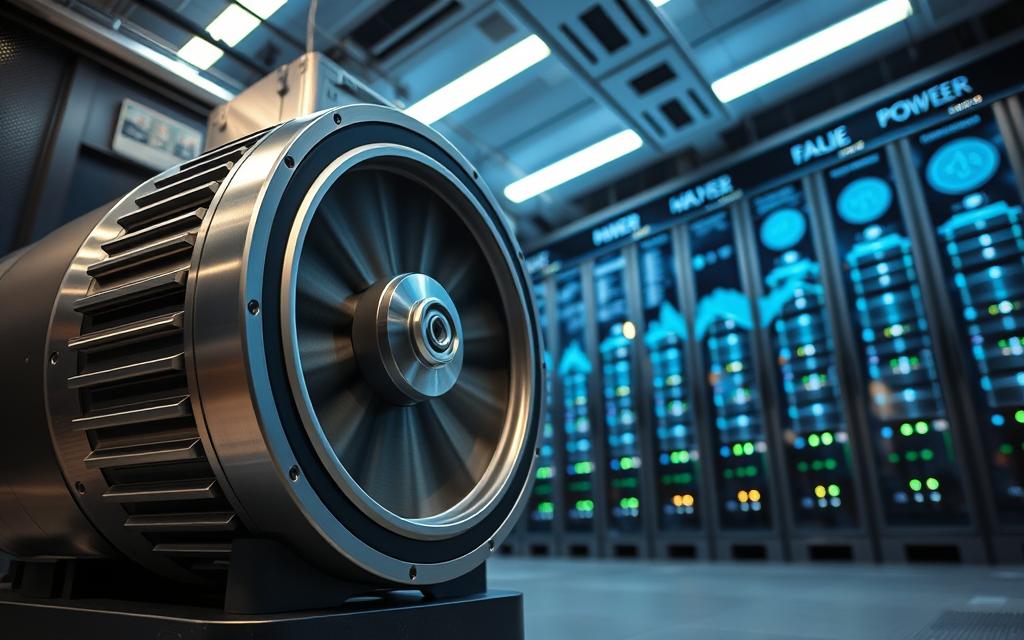
Environmental factors greatly impact backup power equipment’s life and performance. High temperatures can speed up damage to chemical parts, causing systems to fail more often. Moisture can also harm sensitive electronics, leading to corrosion.
To work well, Power Management Solutions need a steady climate. Places that can’t keep temperatures stable will see their equipment last less long. It’s crucial to watch these environmental stressors to avoid sudden power losses.
Flywheels store energy in a spinning mass, making them very reliable. They don’t have the chemical reactions that can cause batteries to fail. This makes them less likely to have thermal issues.
Battery systems, on the other hand, need constant chemical checks to stay good for daily Operations. Teams must keep an eye on how well batteries are working to avoid sudden drops in power. Even though batteries are common, their chemical nature makes them more affected by changes in the environment than flywheels.
Deciding between flywheels and batteries depends on the site’s needs. Mechanical simplicity is often better in places where keeping temperatures stable is hard. The main goal is to pick a system that lowers risks and keeps power flowing without pause.
Sustainable operations mean looking closely at how energy storage affects the planet. Facilities trying to cut their carbon footprint need to choose their power systems wisely. By using Energy Management Strategies, companies can meet their environmental goals.
Flywheel technology is special because it uses kinetic energy in a rotating mass. It doesn’t need harmful materials like lead or lithium. This makes it a cleaner design and reduces environmental harm.
Also, flywheel parts last a long time, which helps with long-term sustainability. They don’t break down like chemical cells do. This means they need to be replaced less often, which helps data centers use energy more efficiently.
Traditional battery UPS systems have big environmental challenges. Making lead-acid and lithium-ion batteries uses a lot of resources and chemicals. These materials can pollute soil and water if not handled carefully.
Recycling batteries is hard, too. While some parts can be recycled, it takes a lot of energy and special facilities. Companies need to think about these lifecycle impacts when choosing power systems.
| Feature | Flywheel UPS | Battery UPS |
|---|---|---|
| Storage Medium | Kinetic (Mechanical) | Chemical |
| Hazardous Waste | None | High (Lead/Lithium) |
| Recyclability | High (Steel/Metal) | Complex/Regulated |
| Environmental Goal | Sustainable Operations | Waste Mitigation |
Starting with Sustainable Operations means picking a power system that fits your maintenance plans. Those who take care of their systems early can make them last longer. With good Energy Management Strategies, you can dodge sudden outages and costly fixes.
Flywheel systems are simple, leading to easier maintenance. They store energy through motion, not chemicals. So, they don’t degrade like other systems do. Routine inspections check the bearings and vacuum to keep the rotor running smoothly.
The predictable lifespan of flywheels helps managers budget better. These systems need less maintenance because they don’t have volatile chemicals. This makes them key for reducing environmental impact through Sustainable Operations.
Battery-based UPS systems are more complex, needing careful monitoring. Battery health depends on temperature and how often they’re used. Regular capacity testing finds weak cells before they fail the whole system.
Keeping up with battery replacement cycles is crucial. Not tracking battery health can cause sudden failures. Using Energy Management Strategies helps predict when to replace batteries, avoiding emergency repairs.
The first few milliseconds of a power failure are crucial. When the main power goes out, switching to Backup Power Systems must be quick. Any delay can damage data or hardware.
Facility managers count on these systems to keep things running during a power outage. They aim to make the switch to backup power smooth and without interruption.
Flywheel systems are great for quick responses. They use kinetic energy to provide power fast when needed. This makes them perfect for places where power drops are a big problem.
Battery-based systems are also good but might take a bit longer to kick in. Even with fast battery inverters, batteries can’t match flywheels for speed. The choice depends on how sensitive the equipment is.
Keeping electricity steady is more than just having a backup. It’s about Power System Optimization. Things like voltage drops and frequency changes can harm electronics. Good systems smooth out these issues before they hit the load.
Using advanced Power System Optimization helps deal with unstable grids. These methods keep the power to servers and controllers stable. Reliable Backup Power Systems are key to keeping operations going smoothly, even when the grid is shaky.
Real-world examples show how modern power management systems help in different settings. They help facility managers see which technologies fit their needs best.
High-density data centers often have little room. A big financial trading firm in New York City used flywheel-based Power Management Solutions. This choice saved space for more servers.
The flywheel units give instantaneous energy bursts during small voltage drops. This keeps trading algorithms running smoothly. It’s a smart way to meet high performance needs without using too much space.
Places that need power for a long time choose battery systems. A hospital network in the Midwest picked advanced lithium-ion batteries for Sustainable Operations. These batteries keep life-support gear running for hours if the power goes out.
Switching to these batteries made the hospital’s power more reliable. Here’s why different places pick different tech:
| Facility Type | Primary Driver | Technology Choice |
|---|---|---|
| Financial Trading | Space Efficiency | Flywheel |
| Healthcare Network | Extended Runtime | Battery |
| Manufacturing Plant | Grid Stability | Hybrid System |
There’s no one-size-fits-all solution. Successful places look at their specific needs, like:
By focusing on these, companies can keep their systems strong. Whether they choose flywheels for quick action or batteries for long-lasting power, the goal is the same. It’s about keeping operations reliable and Sustainable with the right Power Management Solutions.
Modern critical facilities are moving into a new era of power management. This is thanks to fast technological advancements. These changes are key for better Energy Efficiency and long-term Power System Optimization in our digital world.
By using these next-generation solutions, facility managers can keep their systems running smoothly. It’s important to stay up-to-date with these trends to ensure power reliability in the future.
New flywheel systems aim to cut down on mechanical losses for better performance. Engineers are using advanced magnetic bearing technology to hold the rotor in a vacuum.
This innovation greatly reduces physical friction, making the unit last longer. It’s a highly reliable option compared to traditional mechanical bearings.
Battery storage is also seeing big changes, alongside flywheels. Solid-state batteries are the most exciting development in the field.
These batteries offer higher energy density and better safety than standard lithium-ion batteries. They use solid electrolytes, which makes them safer for dense data centers.
Adding these new storage solutions will be crucial for future Power System Optimization. As these technologies improve, they will boost the Energy Efficiency of critical power systems globally.
Choosing between flywheel and battery systems needs careful thought. Managers must consider both immediate costs and long-term goals. This ensures every investment supports reliable Operations.
Flywheel systems are great for places where space and cooling are tight. Batteries are better for longer runs in traditional data centers. Power System Optimization helps match technology with specific needs.
Leaders should focus on modular designs for easy upgrades. Using smart monitoring tools keeps an eye on power assets. This focus prevents downtime and extends equipment life.
Choosing the right technology is key for continuous uptime. By considering these factors, organizations build a strong foundation for reliability.
Following the industry, hunting a role or hiring for one: one account opens all of it.
Enter your email or username and we'll send you a secure link to set a new password.

Discussion