Essential cookies keep the site running. With your OK we also use optional ones to understand how the site is used and make it better. See our Cookie Policy.
Your choice is kept for 12 months.
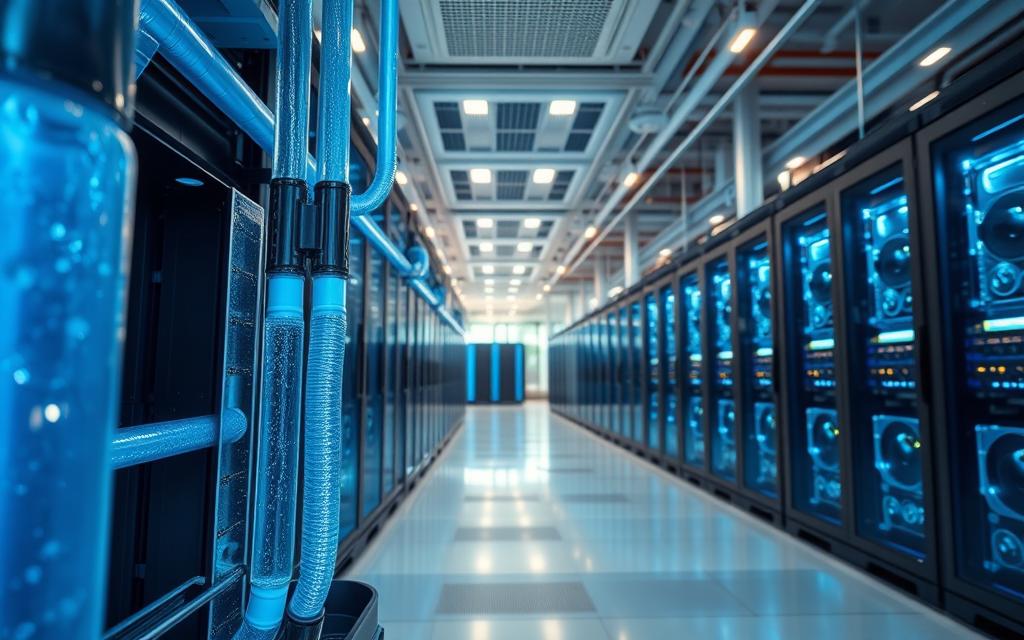
Modern facilities face a big challenge as old air-based methods hit their limits. The fast growth of powerful hardware creates a lot of heat. This is too much for standard fans to handle. So, data center liquid cooling is now the main way forward for leaders in the field.
This change is a big step in keeping things running smoothly. By using advanced thermal management, companies can handle the high power needs of today’s chips. With high density cooling, equipment stays reliable even when working hard.
New immersion cooling systems offer a better way to get rid of heat from components. These data center cooling solutions make things more efficient and cut down on energy waste. As things move forward, these technologies will be key in building future-proof places that meet tomorrow’s needs.
Liquid cooling is now the top choice for high-performance computing. As servers get more powerful, air-based systems can’t keep up. This move to data center liquid cooling is a big step in protecting hardware from heat.

This cooling technology uses liquids that cool better than air. Coolant goes directly to or around hot parts, keeping them at the right temperature. This lets servers pack more tightly without overheating.
“The transition to liquid cooling is not merely an upgrade; it is a fundamental requirement for the next generation of high-density computing.”
Liquid immersion cooling is a top method. It fully submerges servers in a special fluid. This fluid is safe for electronics and takes heat away well.
This method gets rid of loud, power-using fans. It lets servers run faster. Here’s how it compares to air cooling.
| Feature | Air Cooling | Liquid Immersion |
|---|---|---|
| Heat Transfer Medium | Forced Air | Dielectric Fluid |
| Noise Level | High | Negligible |
| Energy Efficiency | Moderate | Very High |
| Maintenance Needs | Frequent | Minimal |
High density cooling is key for today’s servers. It lets data centers fit more power in less space. This cuts down on costs by reducing the need for big air units.
This cooling technology is crucial for growing data centers. It helps manage heat as we need more AI and machine learning. Using these efficient cooling solutions keeps hardware running well for a long time.
Data center operators are turning to immersion cooling systems to beat air-based cooling limits. They submerge hardware in a dielectric fluid for better thermal management. This leap forward changes how we handle the heat from powerful processors.
Air cooling often can’t keep up with today’s server heat. Advanced cooling systems offer a direct heat transfer path, avoiding thermal throttling. This lets hardware run at full capacity without overheating, boosting system reliability.
“The shift toward liquid-based thermal management is the single most impactful change in data center design over the last decade, enabling performance levels previously thought impossible.”
Adopting efficient cooling solutions cuts Power Usage Effectiveness (PUE) dramatically. It eliminates the need for power-draining fans and huge air conditioning units. This slashes electricity costs and helps meet sustainability goals by reducing carbon footprint.
The table below shows air cooling vs. liquid-based methods’ performance:
| Metric | Air Cooling | Immersion Cooling |
|---|---|---|
| Thermal Conductivity | Low | High |
| Energy Efficiency (PUE) | 1.5 – 2.0 | 1.02 – 1.05 |
| Hardware Density | Moderate | Very High |
| Maintenance Needs | High | Low |
High performance cooling enables higher rack densities than traditional methods. Liquid’s heat removal efficiency lets servers be packed closer without hot spots. This density maximizes floor space, increasing compute capacity without expanding the building.
These data center cooling solutions pave the way for future growth. As computing demands grow, the ability to pack more power in a smaller area is key. These advanced cooling systems are the future of sustainable, scalable data centers.
The next decade will see a big change in how we cool data centers. They will use liquid immersion cooling and green power to cut down on carbon emissions.
Now, the world is focusing on using less energy. This push is making companies switch to better cooling systems. New rules will make air cooling less common, pushing for greener options.
Engineers are working on new systems that lose less fluid and grab more heat. They’re also creating tools to track cooling performance in real-time. These tools help keep servers cool, even when they’re working hard.
These changes will shape the future of big data centers. Companies that start using liquid immersion cooling now will be ahead. Share your thoughts on how these solutions might impact your operations in the future.
Following the industry, hunting a role or hiring for one: one account opens all of it.
Enter your email or username and we'll send you a secure link to set a new password.

Discussion