Essential cookies keep the site running. With your OK we also use optional ones to understand how the site is used and make it better. See our Cookie Policy.
Your choice is kept for 12 months.

Modern data centers are complex and need precise management to stay ahead. As businesses grow, keeping track of every asset is a big challenge for IT managers.
DCIM Software is key to success. It gives deep insights into hardware performance. This way, teams can see everything in their facility clearly.
Using strong DCIM Software lets companies watch power and cooling in real time. Adding smart Automation to daily Operations cuts downtime risk a lot.
These systems make data centers more reliable and green. With a central DCIM platform, companies link physical and digital parts. This ensures growth and stability for the long run.
Data Center Infrastructure Management is key for today’s IT facilities. It connects physical hardware to digital tools for monitoring. This central control gives a clear view of the whole system.
DCIM is software for managing data center resources. It offers a complete view of the facility, from power use to cooling. This integrated approach helps teams make smart decisions with real-time data.
Good DCIM Software has key features for daily operations. It includes asset tracking for quick hardware location. Environmental sensors also monitor temperature and humidity to avoid failures.
Power management tracks energy use across devices. This helps spot servers wasting electricity. Teams can then use space better.
Using Data Center Infrastructure Management boosts reliability. It reduces downtime by spotting issues early. This proactive approach is a key feature of DCIM Software.
| Feature | Manual Management | DCIM-Automated |
|---|---|---|
| Asset Tracking | Spreadsheets | Real-time Mapping |
| Power Monitoring | Periodic Audits | Continuous Analytics |
| Issue Detection | Reactive | Predictive |
| Efficiency | Low | High |
Switching to DCIM improves teamwork between IT and facilities. It maximizes every resource. This is essential for growing digital infrastructure.
Automating infrastructure is now a must for top data centers. As data centers grow, manual management slows them down. By automating operations, managers keep their systems flexible and ready for changes.
Efficiency drives the need for intelligent management systems. Software takes over routine tasks, freeing IT teams for big projects. This way, resources are used better, and systems run at their best.
DCIM platforms help streamline these tasks. They cut down on manual work, making asset tracking faster and more accurate.
Human mistakes cause a lot of downtime. Manual changes can lead to hard-to-find problems. Automation ensures changes are always correct and consistent.
Automation lowers the chance of mistakes. Consistency is key, as systems follow the same steps every time. This is crucial for keeping systems running smoothly.
Today’s DCIM software offers tools for easier management. These tools help schedule maintenance and track assets without constant watching. They help teams stay ahead of problems.
The table below shows how automation changes data center management:
| Feature | Manual Management | Automated DCIM |
|---|---|---|
| Task Execution | Slow and prone to error | Fast and consistent |
| Data Accuracy | Variable and outdated | Real-time and precise |
| Resource Usage | Inefficient allocation | Optimized performance |
| Risk Level | High human dependency | Low operational risk |
Using DCIM tools helps automate operations well. As the field grows, using these tools will be key to success.
Having a clear view of your infrastructure is key to keeping it stable and reliable. Without this view, finding problems or potential failures is hard. DCIM software helps by giving you the control you need for smooth operations.
This insight is vital for running server rooms efficiently. It lets teams make smart choices with the latest data. This way, they can avoid long outages and extend the life of expensive equipment.
Monitoring in real-time lets admins track conditions and power loads as they change. Sensors send data to the system, giving a quick look at the data center’s health. This ensures any issues are caught right away.
When power or cooling problems arise, the software warns the team before a big outage. This is crucial for keeping operations efficient. It helps teams adjust power quickly, preventing damage and keeping services running.
Visualization tools help map out data center assets for better planning. They show where equipment is and how it connects to the network. Visual mapping makes it easier to find space for new gear and plan deployments.
Good planning relies on these detailed maps to manage space and resources. DCIM helps visualize the layout, avoiding overcrowding and ensuring proper cooling. This is essential for a well-organized and efficient data center.
Effective energy management is key for sustainable data centers. DCIM helps facility managers see power use across the whole system.
This view lets teams spot where energy is wasted. It turns data into useful insights for saving money over time.
Modern DCIM Solutions track and control energy use in real-time. They find out which equipment uses too much power.
By watching each rack and device, managers can catch problems early. This stops expensive outages and makes sure power is used right.
PUE is how we measure energy efficiency in a place. DCIM software makes it easy to see how efficient a facility is by comparing total power use to IT equipment power.
Improving PUE means fixing cooling issues that cost a lot. Fixing these problems cuts down on energy use a lot.
In the end, DCIM Solutions help save money and protect the environment. They help companies stay efficient and green.
Integrating new software with old systems is crucial for better operations. By using DCIM, companies can link different systems into one. This needs a solid plan to make sure old hardware works well with new systems.
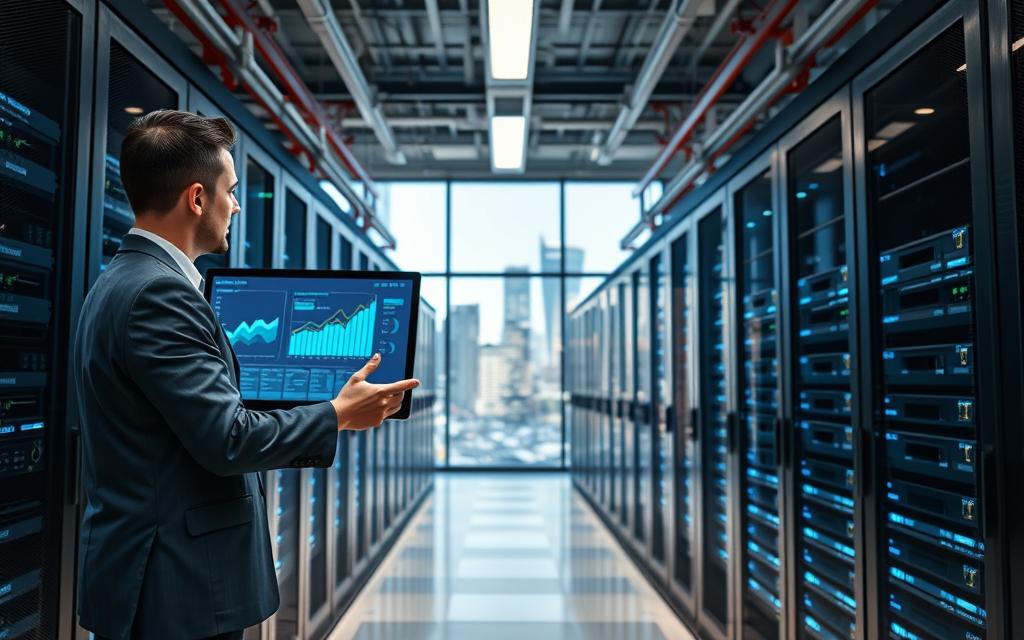
Before adding new tools, managers must check their current setup. They need to see which old devices can talk to new systems using protocols like SNMP or Modbus. Compatibility is the key to a smooth start.
Teams should list the age and what each device can do. This helps figure out if extra tools are needed to connect old and new systems. Doing this early avoids problems later.
To make the transition smooth, start with a small test. This lets the IT team check if data is collected right without stopping important work. This way, they can fix any issues without big problems.
After the test goes well, expand it to the whole place. Keep watching how the DCIM system works. This careful plan helps Streamline Operations and gives a clear view of the data center.
By adding artificial intelligence to DCIM, operators can control and predict better than ever. This change moves from manual checks to smart, automated choices. Today’s facilities use these systems to handle daily Operations more accurately.
Artificial intelligence turns data into useful information. It helps teams see how a facility works better. This way, they can plan ahead instead of just reacting to problems.
AI brings many benefits for managing Operations:
Predictive maintenance is a big step up for keeping hardware running longer. AI looks at past data to spot signs of trouble before it happens. This lets techs fix things when it’s convenient, cutting down on costly downtime.
Teams that use these advanced methods can make their hardware last longer. They don’t replace things just because it’s time. Instead, they do evidence-based maintenance. This saves money and keeps DCIM systems reliable for all Operations.
Unexpected failures can stop a business in its tracks. But, modern tools offer a lifeline. DCIM gives a full view of the data center, acting like a brain in crisis. It helps IT teams find and fix problems fast, cutting downtime.
Keeping services running needs more than just backup hardware. It needs smart management. DCIM Software gives the needed details and updates in real-time. This is key when big disruptions hit.
Having a clear map of how things work together is a big plus. The software shows how assets connect, helping teams focus on key apps first. This proactive approach stops small problems from becoming big failures.
Good planning uses automated tools to ease the load on people. Use your DCIM platform’s remote monitoring to watch over things like temperature and power. This catches threats early, before they cause big problems.
Setting up automated backups is also key. This keeps data up-to-date, making it easy to switch to backup sites if needed. Following these steps helps companies stay strong and protect their digital stuff from surprises.
Keeping your infrastructure safe starts with protecting the systems that watch over it. As companies use DCIM to improve operations, this software becomes a key target for threats. It’s crucial to keep this software safe from unauthorized access for any modern data center.
Strong security starts with strict access control protocols. Admins must use multi-factor authentication to make sure only the right people can see sensitive data. By controlling who can do what, the risk of mistakes or bad actions goes down a lot.
Also, encrypting data is key for keeping it safe. Encryption protocols keep data safe whether it’s sitting still or moving around. Security is not a one-time task but a continuous process of hardening the environment.
“Security is always excessive until the moment it is not enough.”
Today’s data centers face many rules and laws. A DCIM system that logs changes and user actions helps show compliance. These logs are key for meeting strict rules.
Companies should pick a DCIM that follows global standards like ISO/IEC 27001 or SOC 2. Choosing a DCIM that focuses on security from the start helps keep assets safe. This keeps the facility running smoothly and securely in today’s digital world.
Modern infrastructure management is changing fast thanks to new tech. Companies need better tools to keep up with these changes. Staying informed about these trends is key for any business wanting to stay ahead.
The industry is seeing a lot of new ideas. Edge computing is a big one, making data processing faster by moving it closer to where it’s used. This means management systems need to work well in these new setups.
Also, advanced sensors are giving us detailed info on things like temperature and humidity. This info helps operators make data-driven decisions to boost efficiency.
DCIM Software is getting smarter, thanks to machine learning. It’s now able to do routine tasks and spot problems before they happen. This change helps move from just fixing things to preventing issues.
Scalability and cloud integration are now must-haves for good DCIM tools. As companies grow, their tools need to grow with them. This makes DCIM a crucial part of success, helping businesses adapt to new tech.
Modern data centers need smarter management to stay ahead. Using advanced software gives facility managers full control over their complex spaces.
DCIM leads to better visibility and control over resources. It brings together different data into one place for smarter decisions.
Teams work better with accurate, up-to-date information. This leads to better energy use and less waste.
Automation is key for lasting success. It automates routine tasks, freeing staff from errors and saving time.
By investing in these technologies, facilities prepare for future needs. Companies that focus on digital upgrades stay ahead in a data-driven world. Leaders should see these tools as vital for ongoing success.
Following the industry, hunting a role or hiring for one: one account opens all of it.
Enter your email or username and we'll send you a secure link to set a new password.
Discussion